Vines and Values
A consumer's guide to sustainable wine — what the labels mean, what climate change is doing to the vineyard, and which bottles are worth your money.
Archway Publishing · First published January 2025
Hardcover, paperback and eBook
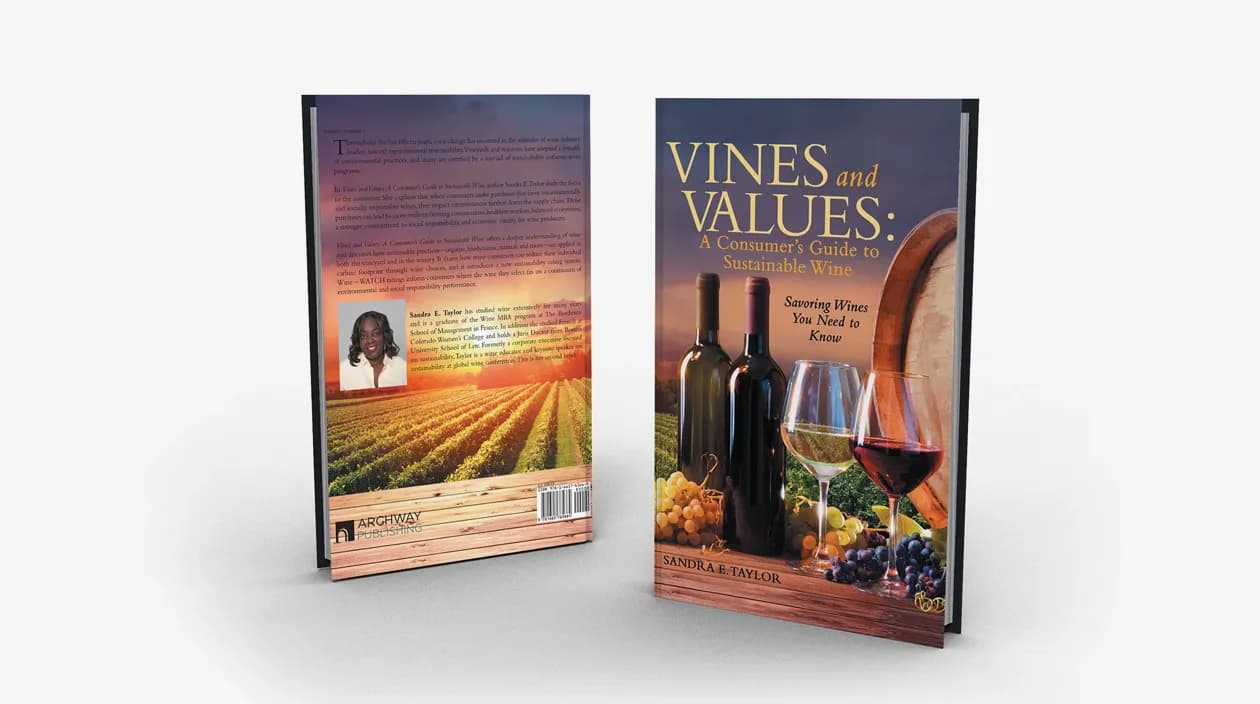
A Consumer's Guide to Sustainable Wine — Savoring Wines You Need to Know
Vines and Values
The first guide of its kind: how organic, regenerative organic, biodynamic, natural and certified-sustainable practices are applied in the vineyard and in the winery, what climate change is doing to both, and how to lower your own footprint at the shelf. Its heart is a set of lists — sustainable wineries and their credentials, and wines recommended by style and grape, with tasting notes and food pairings. A whole chapter of them costs under $20.
Archway Publishing · Hardcover, paperback and eBook
Inside the book
Six things you will be able to do afterwards.
Written for the person standing in front of a shelf with a trolley behind them — not for a certification committee.
- 01Tell organic, regenerative organic, biodynamic, natural and certified-sustainable wine apart, in the vineyard and in the winery — and see what conventional, mass-produced wine does differently.
- 02Understand what climate change is doing to weather, soil and topography, and to the wines that come out of them.
- 03Weigh the packaging: what a heavy glass bottle really costs, and when a box, a can or a keg does better.
- 04Ask the questions certifications often skip, about the people who pick the grapes and the communities they live in.
- 05Read a winery's record through Wine-WATCH, a new rating for how a winery farms, makes, ships, proves and treats people — not for how its wine tastes.
- 06Choose from wines recommended by style and grape, with tasting notes, food pairings and each producer's credentials — and a whole chapter under $20.
Contents
What is in it, chapter by chapter.
Part I
- IntroductionWhy the consumer holds the power, and what this book is for.
- Chapter 1: My Wine StoryFrom Birmingham to the Foreign Service, a bottle of Volnay in Burgundy, and a palate honed on coffee. The short version →
- Chapter 2: What Is Sustainable Wine, and Why Does It Matter?The five methods and the conventional wine they depart from, each with wineries that practise it. The short version →
- Chapter 3: Wine and Our Climate FutureWhat a warming climate does to the vineyard, how wineries are responding together, and why the bottle matters most.
- Chapter 4: Social SustainabilityThe people who pick, what good employers do for them, who is missing from wine, and why wine landscapes are heritage.
- Chapter 5: Introducing Wine-WATCH, a New Rating System for Sustainable WineA rating for wineries rather than wines, and profiles of the sustainable wineries to know.
Part II · Sustainable Wineries and Wines You Need to Know
- Chapter 6: White WinesFresh and crisp, soft and elegant, rich and expressive. The short version →
- Chapter 7: Red WinesFresh and fruity, rich and concentrated, big and bold. The short version →
- Chapter 8: Sweet WinesHow sweetness is made — by stopping fermentation early, drying the grapes or freezing them on the vine. The short version →
- Chapter 9: Champagne and Sparkling WinesThe traditional and tank methods, and the sweetness scale from Brut Nature to Doux. The short version →
- Chapter 10: All the RestRosé, which is a style rather than a grape, and orange wine. The short version →
- Chapter 11: Value Wines: A Selection of Sustainable Wines under $20Because not every sustainably produced wine breaks the bank. The short version →
Appendices
- Wine certificationsThe regional, social and environmental seals, and where to find each one. The short version →
- International Wineries for Climate ActionIts members, as they stood in June 2024.
- The Wine-WATCH surveyThe questions a winery is asked before it is rated.
With research by Jess Canose, who verified every winery's sustainability claims, certifications and accomplishments in the profiles and lists. Wine-WATCH designed with Dean DeCrease. Flavour profiles organised with Anne Richter Arnold, DipWSET.
Why this book
Everyone asks the same question.
Over the last fifteen years there has been a sea change in the wine industry's attitude towards environmental responsibility. Many wine leaders speak sustainability; their wineries have adopted a breadth of environmental practices; and some vineyards are certified by a myriad of authentication programmes. It is a much needed change — but with change come more questions, and more important debate.
So many people ask me the same one: what is the difference between organic, biodynamic, regenerative organic, natural and other certified sustainable wines? It is easy to get caught up, and confused, by the many labels floating around. That is why I wrote a book that defines them, for the people who have to read them in a shop.
Because when consumers make purchasing decisions that favour environmentally and socially responsible wines, the effect runs further down the supply chain. Those purchases lead towards more resilient farming communities, healthier workers, balanced ecosystems, a stronger commitment to social responsibility, and producers' own economic vitality.
As consumers we are privileged to choose from thousands of wines, from a growing list of regions around the world. Faced with so much choice, it is no wonder people find wine puzzling and intimidating — be it a restaurant list, the local wine shop or, increasingly, an online marketplace. Add to that the mystery of identifying the wines that match your environmental and social values.
This book does not focus on the doom and gloom of climate change and environmental degradation. Rather, consumers will learn how we can make a difference in our climate future doing something we enjoy: drinking good-tasting wines.
“I want everyone to buy sustainable wine. Why not change the world for the better, and enjoy doing it?”
— Sandra E. Taylor
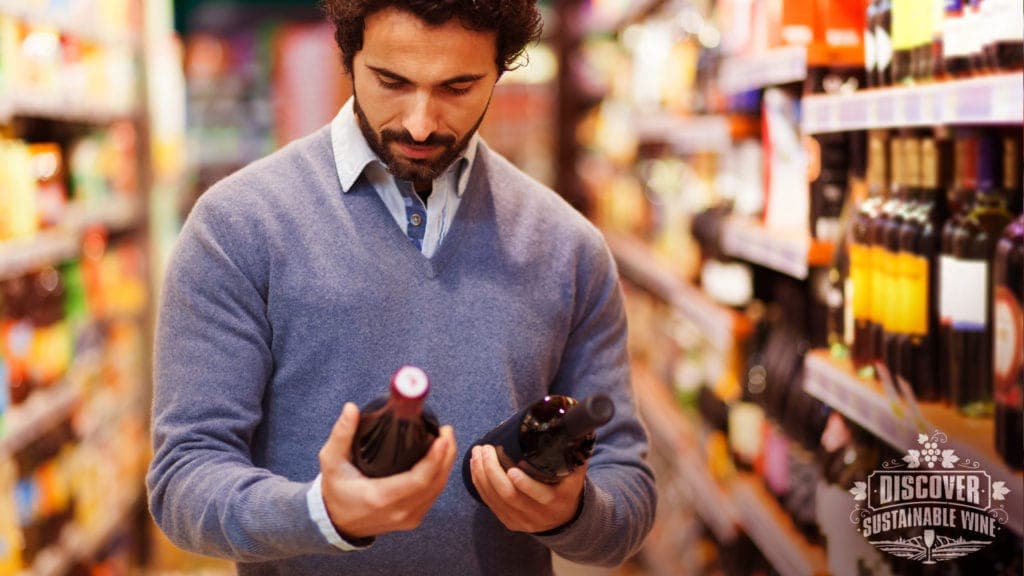
Two bottles, two sets of claims, one decision
Change it with your cart.
Choose the lighter bottle.
The glass alone can contribute nearly 50% of a wine's carbon footprint. Manufacturing heavy glass is energy intensive and shipping it adds more. A heavier bottle does not signal a better wine.
Try the box.
Bag-in-box — technically BIB — has a carbon footprint 84% lower than a 750 ml glass bottle's, and keeps the wine fresh for four to six weeks once it is opened.
Read past the seal.
Nearly 30 wine regions run their own certification programme, with little standardisation between them. Underneath, the serious ones ask the same five things of a winery: decide, learn, commit, submit to audit, and improve every year. Look for a named programme's seal, not the word “sustainable”.
Buy from people who look after people.
Some wineries can answer that question readily, in detail, without being asked twice. Buy from those.
All four are worked through, bottle by bottle, in Vines and Values. What the labels behind them mean is set out in full on the guide →
“For those of us who depend on the staff of our wine shops for information on sustainably produced wines, this book is the answer. It provides very accessible information that helps the reader decide which wines to explore and buy.”
Franklin C. Moore, wine enthusiast and early reader
2017 · The first book
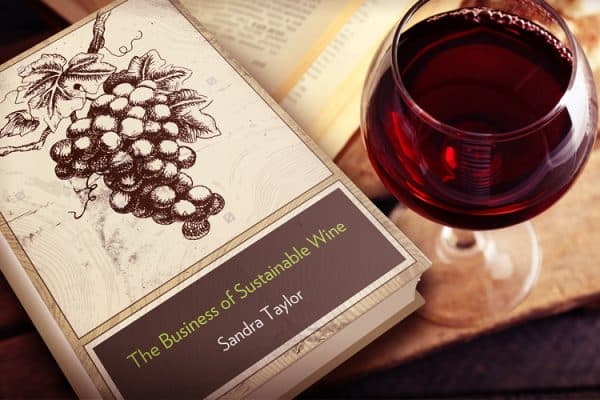
The Business of Sustainable Wine
How to build brand equity in a 21st century wine industry
Modern agriculture is the largest single contributor to global greenhouse gas production, deforestation and water consumption. Biodiversity, climate change, energy, soil degradation and water scarcity are critical issues. Consumers are increasingly — and justifiably — concerned about where their food and drink come from and whether they are produced responsibly, often without a way of determining the provenance of what they consume.
In The Business of Sustainable Wine, Sandra Taylor offers a new view of how the industry can be an important actor in sustainable agriculture, and a unique insight for the consumer into what to look for on supermarket shelves. It analyses sustainability trends in wine regions around the world — Argentina, Australia, Chile, France, Italy, New Zealand, South Africa and the United States.
Drawing on case studies from a multitude of commodity industries, consumer products and consumer packaged goods, it gives producers the tools to integrate sustainability into their winegrowing, branding and marketing, and gives retailers' procurement managers a way to assess the sustainable attributes of the wines on offer. Like fair trade cocoa and shade grown coffee, wine must sooner or later meet the demands of social activists and a growing contingent of consumers for ethical and organic products.
Consider it a companion to have by your side this year
Get a copy.
Hardcover, paperback and eBook, from Archway Publishing. Or start with the guide — what the labels the book is built on actually mean, free and in full.